01.03.2013
The University of Edinburgh
‘The Exhibition and Its Histories’ is a one-day symposium in which leading international figures from the field of curatorial practice will discuss and interrogate the increased emphasis in recent years on the ‘exhibition form’ within art and art history education. Paralleling the rise of the curator’s position within the contemporary art landscape, the institutional teaching of art and art history has increasingly tended towards an analysis of the exhibition as well as the artist and the artwork. This is most evident in the form of post-graduate curatorial programmes, which have proliferated over the past decade. The symposium will seek to address, among other concerns, the following questions:
- Why has the history of exhibitions come into currency at this specific moment?
- How does the study of exhibition histories contribute to the discipline of art history?
- Why study the exhibition? What does it offer us that the study of an artwork or an artist's practice does not?
a collaboration between:



Supported by the AHRC
Diana Baldon

Diana Baldon is an Italian curator and is the director of Index – The Swedish Contemporary Art Foundation in Stockholm. She is currently writing her PhD thesis at the Academy of Fine Arts Vienna on the crossover between art and politics in European post-conceptual art after the year 2000. She received a master’s degree in Creative Curating at Goldsmiths College, University of London, in 2002. Since then she realised many exhibitions internationally, most recently, Counter-Production at the Generali Foundation (Vienna) and the 2nd Athens Biennale HEAVEN (Greece). Her critical writing has appeared in a number of catalogues and international art magazines such as, among others, Artforum International, Flash Art, Texte zur Kunst, and Afterall. Since 2005 she has conducted lectures, public talks and panels on curating and contemporary art at, for instance, the Venice Biennale; Witte de With, Rotterdam; the Postgraduate Program in Curating at the Zürcher Hochschule der Künste; and CuratorLab at Konstfack University College of Arts, Crafts and Design, Stockholm.
Attempts to new forms of ‘trans-scriptive' curating
This presentation focuses on a case study that I was asked to propose in this symposium - The Exhibition and its Histories - that I conceived for Index – The Swedish Contemporary Art Foundation, a not-for-profit contemporary art institution based in Stockholm that I direct since last year. Instead of adopting the traditional format of a group exhibition, the exhibition series The audience is the mother of self-invention unfolded as an ambitious weekly programme of short-lived exhibitions and performance-based events by Swedish and international artists, curators, filmmakers, and musicians. For two months the series mapped out still-undisclosed art historical epistemologies, in particular the expanded definition of scoring as a trans-scriptive device. Throughout the 20th century artists used scores as a way to map out movement and to record thought. Graphic notations, verbal instructions, storyboards and stage directions have been elaborated as de-scriptive and pre-scriptive sign systems, focusing on the ability of artistic processes to translate concept and work. In the 21st century, artists have revisited and re-interpreted the infinite possibilities proposed by scores as classic modernist tools. Annotations, variations, reconstructions and additions to the originals have become recognised trans-scriptive methods of work. These have evolved from the status of draft or documentary materials standing in for objects, images or actions, into forms that put equal emphasis on both copy and original, or play with the act of re-staging historic precedents. This approach created a productive space for discussion about the tensions between scoring and forms of agency involving the audience. It raised questions about the degrees of authenticity of a performance that transforms into an image, and its reception as documentary material. Spectators are chroniclers directly involved in the constitution of an artwork; they can replace visual components with the inscription of the artwork into its medial reception, constantly dispersing. By confronting these polarities — of ‘before’ and ‘after’, precondition and anecdote — The audience is the mother of self-invention analysed the complex interaction between trans-scriptive procedures, event, mediation, reception and dissemination. The premise of the series questioned and re-articulated some consolidated conventions inscribed in how group exhibitions are temporally and physically represented, communicated and received by their publics. Throughout its institutional history – established in 1974 as the artist association Fotograficentrum, acting in the 1980s and 1990s as the publisher of the art magazines Bildtidningen and Index, in 1996 having become a Foundation that initiated acclaimed projects by international artists such as Eija-Liisa Ahtila, Pierre Huyghe and Harun Farocki – Index has always attempted to challenge prevailing norms and structures of aesthetic and curatorial production, putting at centre of its attention on-going explorations and interest in visual displays and viewer-related experiments encompassing the changed conditions of presentation and reception of art. This approach will continue with the second instalment of Counter-Production, a group exhibition curated by myself and Ilse Lafer and in partnership with the Generali Foundation, Vienna, which in order to question how artistic productivity is experienced and addressed in the context of an exhibition today, it presents a risk-taking new approach in virtualizing it by means of cinematic strategies. The initiative of making an exhibition as a film should not be considered a matter of documentary representation but, rather, an experiment rooted in the tension between the staging of the documentary (portraying the experience of the exhibition from the side of those spectators who saw the first installment at the Generali Foundation, while attempting to meet the expectations of viewers in Stockholm) and the documentary of the staging (articulated through the transcription of an exhibition into filmic ‘space’).
Kirsten Lloyd
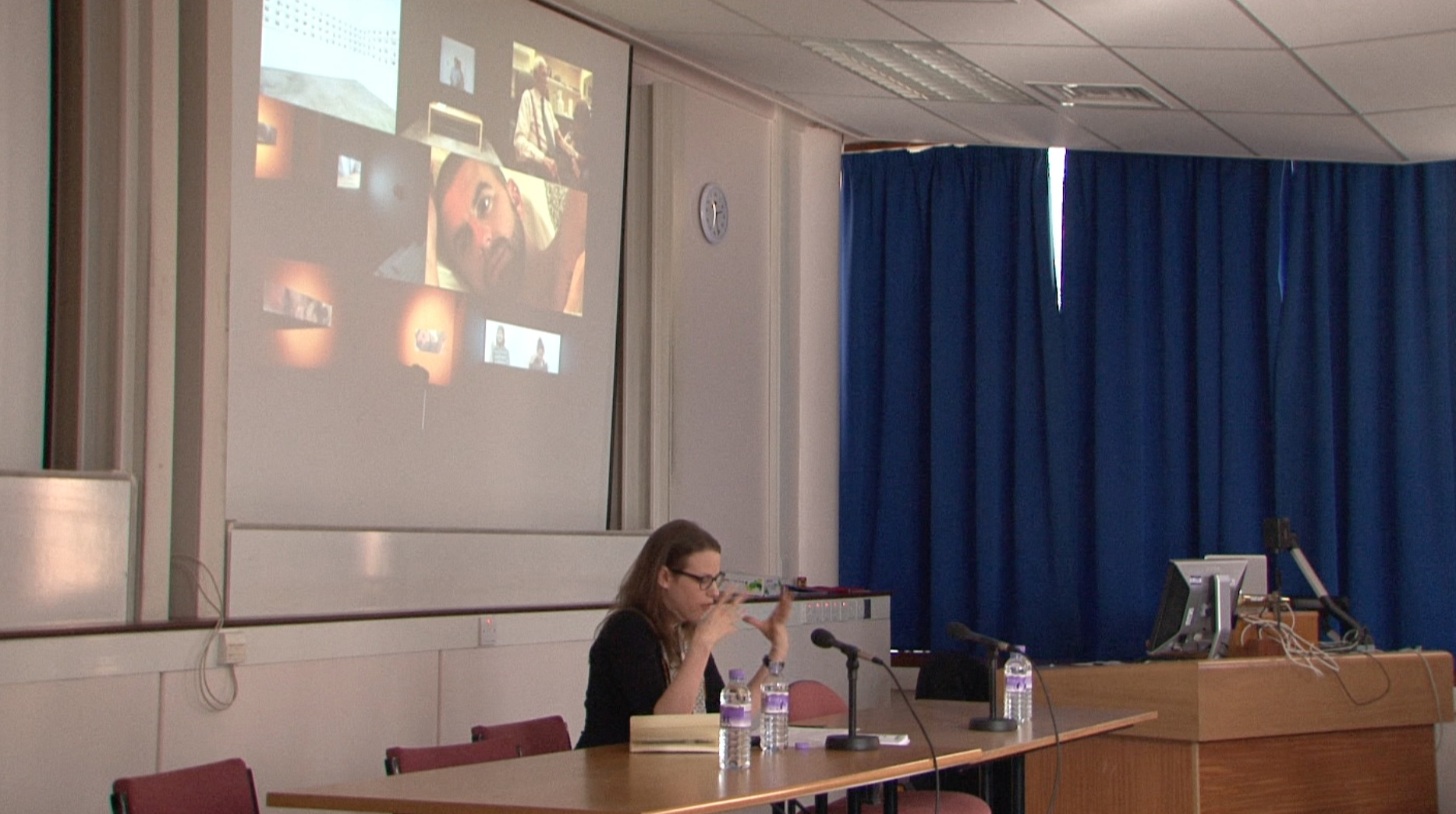
Kirsten Lloyd is Associate Curator at Stills, Edinburgh, where she is currently curating a three-year programme of exhibitions, research workshops, public lectures and residencies entitled Social Documents, intended to examine artists’ mediation of social, political and economic realities (http://www.stills.org/social-documents). The exhibition ‘The Ethics of Encounter’ launched the project in 2010 with an interrogation of the complex interfaces which have emerged between aesthetics, politics and ethics in art’s most recent ‘social turn’. This was followed in 2011/12 with a public programme centred around the documentarist Allan Sekula’s rigorous photographic and filmic mapping of the economic mechanisms and spaces of globalisation. The trilogy will conclude in 2013 with the group exhibition 'ECONOMY', co-curated with Angela Dimitrakaki. Investigating the production of subjectivity through a capitalist economy in the 21st century, the project will be hosted by CCA Glasgow and Stills Edinburgh. Previous projects have included Nicky Bird’s Beneath the Surface/Hidden Place (2006-10), charting the effects of economic change and regeneration in Scotland and the Martha Rosler Library with Anton Vidokle (2008).
Kirsteen Macdonald
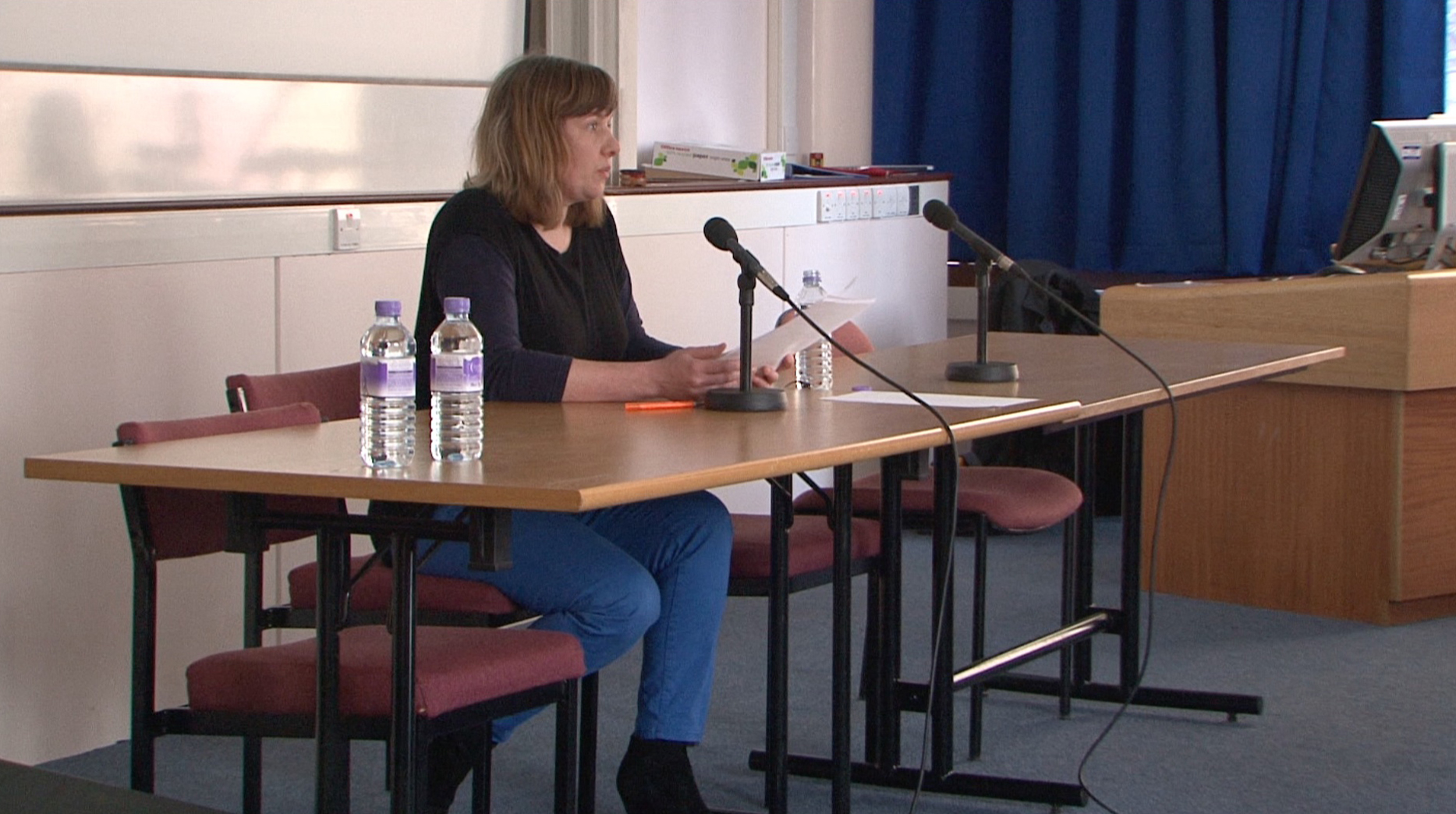
Kirsteen runs Parallel Lines, an agency for curatorial projects and research based in Glasgow. Over the past three years she has worked on projects including new commissions and accompanying publications with artists Graham Fagen and Corin Sworn at Timespan in response to the unique historical and geographical context of Sutherland in Highlands of Scotland; presentations including a programme at Salon Populaire, Berlin on her ongoing curatorial research with the extensive Lindsay Anderson archive held at the University of Stirling; and as Programmer: Professional and International Visits for Glasgow International Festival of Visual Art. In 2012 she enrolled as an AHRC-funded doctoral researcher at Glasgow School of Art to develop a thesis on the recent history of the curatorial in Scotland. Between 2010-2011, she led the VIRE: VAGA International Research Enquiry commissioned by the Scottish Arts Council, investigating the conditions and needs of curators in Scotland working internationally.
Towards a history of exhibitions in Scotland
Simon Sheikh
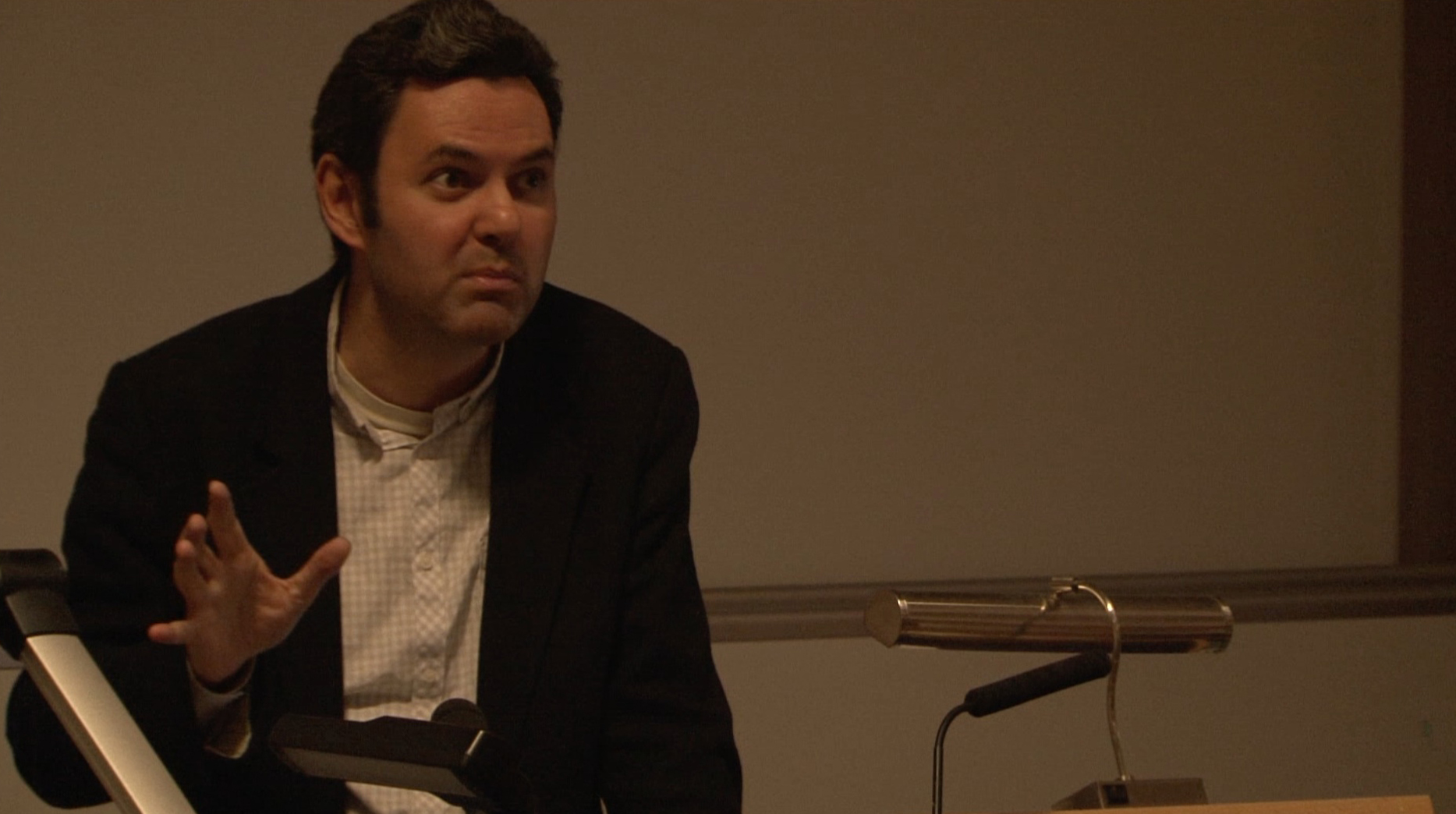
Dr. Simon Sheikh is a curator and theorist. He is Senior Lecturer in Curating and Programme Director, Goldsmiths, University of London. He is a correspondent for Springerin, Vienna, and a columnist for e-flux Journal, New York. He is currently a researcher for the on-going Former West project, initiated by BAK in Utrecht. Curatorial work includes exhibitions such as Capital (It Fails Us Now), UKS, Oslo, 2005 and Kunstihoone, Tallinn, 2006; Vectors of the Possible, BAK, Utrecht, 2010; All That Fits: The Aesthetics of Journalism, QUAD, Derby, 2011, Do You Remember the Future?, Etagi, St. Petersburg, 2011, and Unauthorized, Inter Arts Center, Malmö, 2012. Recent publications include the anthologies In the Place of the Public Sphere?, b_books, Berlin, 2005, Capital (It Fails Us Now), b_books, Berlin, 2006, and On Horizons (with Maria Hlavajova and Jill Winder), BAK, 2011. A collection of his essays is forthcoming from b_books. Lives in Berlin and London.
A Conceptual History of Exhibition-making
Since 1989, we have not only seen (geo)political and cultural changes in Europe, former West and East alike, but also a renewed interest in the exhibition as the main vehicle for contemporary art, not only in terms of presentation, but also production: the exhibition as medium. We have also seen the specialization of exhibitions into what can be characterized as instituted genres of exhibitions. We must therefore ask ourselves not only what a history of exhibitions will tell us about art, but also about history, and about how it is written and read, rewritten, and re-read. Are such histories necessarily always written by the victors—short term as well as long term, internationally as well as nationally? This keynote looks at a few examples, both canonical and non-canonical, in order to sketch out how a typology of exhibitions must be established, but also to ask what makes exhibitionary articulations readable and translatable, and indeed successful and unsuccessful within their parameters and strategies. In other words, the question is: is it possible to predetermine the effects and affects of exhibitions within their chosen type and/or efforts to not conform to type? What are its relations to histories and counter-histories, i.e. what sort of horizon is set up by a given exhibition in its types, forms, and articulations?
Lucy Steeds
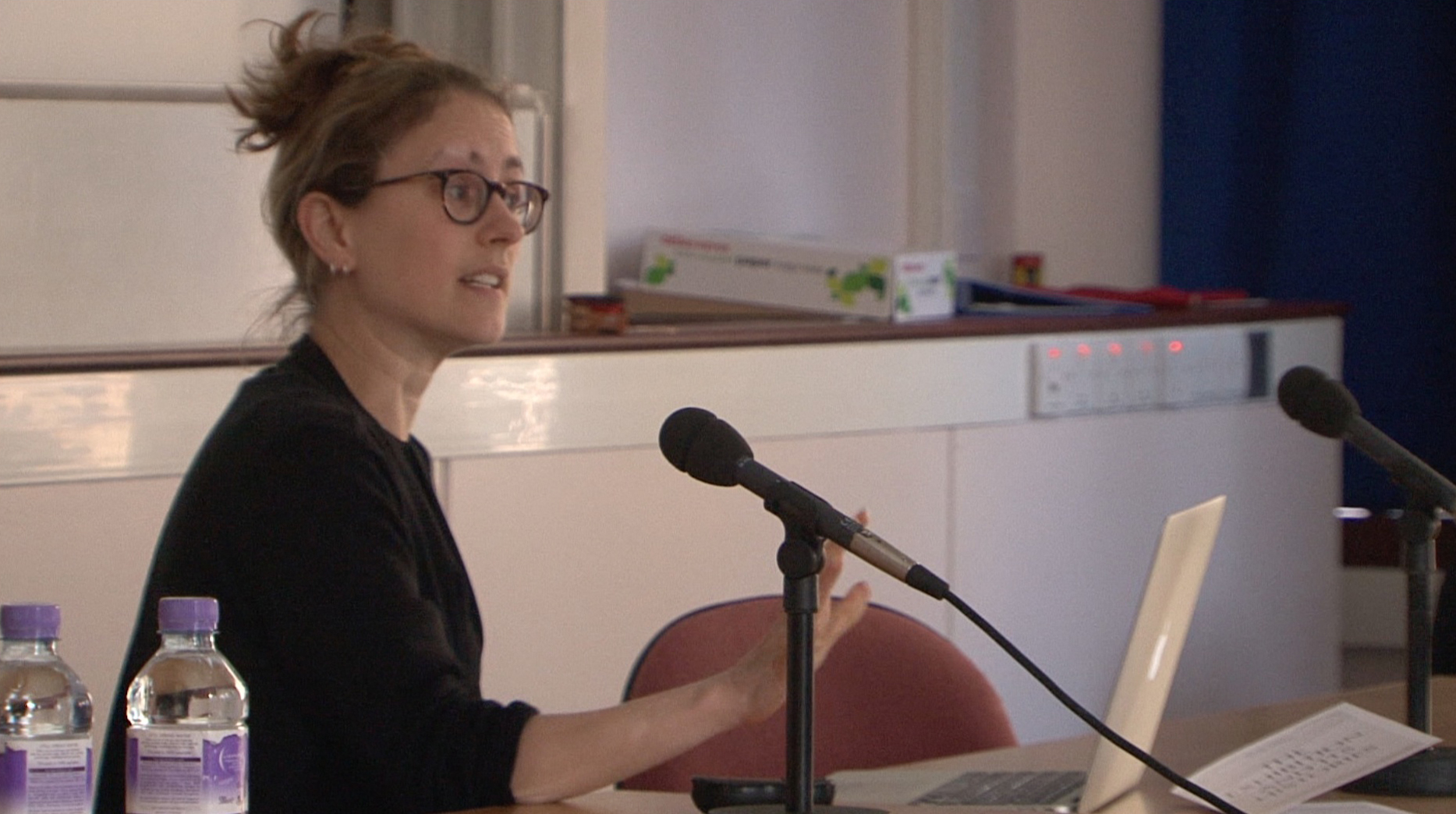
Lucy Steeds is the lead author of a forthcoming book that offers critical reappraisal of the 1989 Paris exhibition ‘Magiciens de la Terre’ (Making Art Global, Part 2, Afterall, 2013) and is shortly to co-convene a session titled ‘Thinking and Rethinking Exhibition Histories’ as part of the annual conference of the UK Association of Art Historians (April 2013). She is Editor of Afterall's Exhibition Histories series of publications and co-Pathway Leader for MRes Art: Exhibition Studies at Central Saint Martins College of Art and Design, London. She has a background in exhibition making in the field of contemporary art from six years at Arnolfini in Bristol and her previous teaching experience includes lecturing in art history and theory at the Ruskin School of Art, Oxford. She has a doctoral degree in Cultural Studies from Goldsmiths College in London, for which she took specific works of art by Jasper Johns and Bruce Nauman as a point of departure in order to write about limit experience and its approximation in prehistoric art, psychopathology and neuroscience.
Exhibition Histories: What and how? From research, publishing and pedagogy
Lucy Steeds will address the questions on which the symposium is based and add some of her own. In doing so she will draw on her work for Afterall’s book series, Exhibition Histories, and speak from the perspective of the course and research programme that she co-leads at Central Saint Martins College of Art and Design, MRes Art: Exhibition Studies.
Steven Ten Thije

Steven ten Thije is researcher who holds an MA in both Art History and Philosophy. He previously taught art theory at the Rietveld Academy, Amsterdam. Ten Thije is currently working on a PhD at the Hildesheim University, Hildesheim, supported by the Van Abbemuseum, Eindhoven. His doctoral research focuses on the development of collection display in museums for modern and contemporary art in the second half of the twentieth century. In relation to this research, he also functions as a research curator for Play Van Abbe, a large exhibition program starting in November 2009. In addition, ten Thije is a thesis supervisor at the Sandberg Institute, Amsterdam. He has written articles for journals such as De Witte Raaf and has contributed to other catalogs and art publications, such as the book Once Is Nothing. Individual Systems (part of the joint contribution of the Van Abbemuseum and BAK to the Brussels Biennial in 2008). Ten Thije lives and works in Amsterdam and Eindhoven.
Transcendental or Dialectical – Two options for a history of art exhibitions
In the last years writing the history of art exhibitions has become a respectable academic enterprise. Aside from the pressing methodological questions this new scholarly work raises (especially which source material can be used and how), this historiographical enterprise also presents some theoretical, epistemological challenges. The most complex of which is what kind of history we are dealing with in this case? Are we writing a general, successive history of art exhibitions that can be considered as a new version of a general art history? Or does art exhibition history share in the complex rethinking of art history as a discipline as conducted recently by art historians like Georges Didi-Huberman. In his writings, especially on German-Jewish art historian Aby Warburg, art is not considered as belonging to ‘a’ history, but much more as a ‘means’ through which we can reflect on the complex historicity of human life and culture. In my presentation I want to revisit Didi-Huberman his argument through the lens of a polemic around Alois Riegl’s notion of artistic volition (Kunstwollen) that took place between art historian Erwin Panofsky and museum curator Alexander Dorner in the 1920s. In this debate Panofsky presents a transcendental model for art history, which can be aligned with the ambition to write a general history of art, whereas Dorner takes a complex relativistic position that shows already the first traces of complex and impure dialectics, which he would later work out in more detail in his 1947 publication ‘The Way Beyond ‘Art’’. By discussing these two positions I want to demonstrate the limits of Panofsky’s model and the contemporary potential of Dorner’s proposal and hope to show the profound link between current re-thinking of art history and the rise of art exhibition history.
Resources
Below are a number of resources for those interested in exhibition making and its histories. Firstly is a selection of articles that we feel particularly pertinent to the symposium itself. Secondly a list of some of the periodicals being published. Thirdly a selection of the ever growing library of books on the subject, most of which should be available in a well stocked art library.
Selected articles
TO SHOW OR NOT TO SHOW
- Jens Hoffmann and Maria Lind in conversation, Mousse Magazine
‘Remembering Exhibitions’: From Point to Line to Web’
- Reesa Greenberg, Tate Paper
Emergence
- Paul O’Neill and Mick Wilson, Nought to Sixty, ICA London
Look and Learn
- Conversation, Frieze
Positively White Cube Revisited
- Simon Sheikh, e-flux journal
1,2,3 THINKING ABOUT EXHIBITIONS
- On Curating
Periodicals focussed on Curating and Exhibition Making
On Curating
(online)
#OpenCurating
(online)
RedHook
(online)
Manifesta Journal
(online and print)
The Exhibitionist
(print only)
Journal of Curatorial Studies
(online and print, subscription needed)
Books
Exhibition Histories
- Series published by Afterall
Thinking about Exhibitions
- Bruce W. Ferguson, Reesa Greenberg, Sandy Nairne (eds.)
What Makes a Great Exhibition
- Pauline Marancola (ed.)
Curating Subjects
- Paul O'Neill (ed.)
The Culture of Curating and the Curating of Cultures
- Paul O'Neill
Cultures of the Curatorial
- Beatrice von Bismarck, Jörn Schafaff, Thomas Weski (Eds.)
Everything You Always Wanted to Know About Curating But Were Afraid to Ask
- Hans Ulrich Obrist
A Brief History of Curating
- Hans Ulrich Obrist (ed.)
The Power of Display
- Mary Anne Staniszewski
Inside the White Cube: The Ideology of the Gallery Space
- Brian O'Doherty
About the Organisers
Benjamin Fallon
Benjamin Fallon is an independent curator, writer and designer currently based in Stockholm where he is part of the CuratorLab programme at Konstfack. He served as co-director of Embassy Gallery between 2008 and 2010, was a member of Edinburgh Sculpture Workshop’s Artistic Programme Committee from 2006 to 2008, and ran his self-initiated project ONEZERO between 2005 and 2008. Ben is an occasional visiting lecturer at Edinburgh College of Art and Edinburgh College on the Contemporary Art Practice course.
Recent projects include 'Cycling Through' screening as part of Lux Tramway festival of moving image, Tramway Glasgow 2012 ‘Banal Inferno’ exhibition, CCA Glasgow 2010, ‘Hello World’ exhibition Embassy Gallery, 2010, ‘Broadcast Yourself’ project as part of ‘No Soul for Sale’ Tate Modern, 2010 and ‘Warehouse of Horrors’ +44 141 Glasgow, 2009.
Benjamin is instigator of the working group ‘Let’s get together and call ourselves an institute.’ researching the possibilities for new forms of institutional practice.
http://www.theopenseas.orgKirsteen Macdonald
Kirsteen runs Parallel Lines, an agency for curatorial projects and research based in Glasgow. Over the past three years she has worked on projects including new commissions and accompanying publications with artists Graham Fagen and Corin Sworn at Timespan in response to the unique historical and geographical context of Sutherland in Highlands of Scotland; presentations including a programme at Salon Populaire, Berlin on her ongoing curatorial research with the extensive Lindsay Anderson archive held at the University of Stirling; and as Programmer: Professional and International Visits for Glasgow International Festival of Visual Art. In 2012 she enrolled as an AHRC-funded doctoral researcher at Glasgow School of Art to develop a thesis on the recent history of the curatorial in Scotland. Between 2010-2011, she led the VIRE: VAGA International Research Enquiry commissioned by the Scottish Arts Council, investigating the conditions and needs of curators in Scotland working internationally.
http://www.parallellines.org.ukHarry Weeks
Harry Weeks is a doctoral researcher at the University of Edinburgh. His PhD research project, initiated in 2010, is entitled Negotiations of Community in Contemporary Art and examines the convergences of post-communist political philosophy and contemporary art practice. He curated the Ethics, Nationalism and the Theatrics of Documentation Film Lounge programme at Stills Gallery, Edinburgh in 2011 and has spoken internationally on a variety of issues relating to contemporary art and politics. He convened the Feminisms of Multitudes Panel at the AAH General Conference in 2012 and is co-convener of 'The Exhibition and its Histories' symposium to be held in Edinburgh in March 2013. His paper entitled Re-cognising the Post-Soviet Condition: Contemporary Art in the Baltic States was published in March 2010 in ‘Studies in Eastern European Cinema’. In early 2013 a chapter examining contemporary performance practice entitled Ethics in Public will appear in the edited book Interactive Contemporary Art: Participation in Practice, published by IB Tauris and edited by Kathryn Brown.
http://hjjweeks.tumblr.com